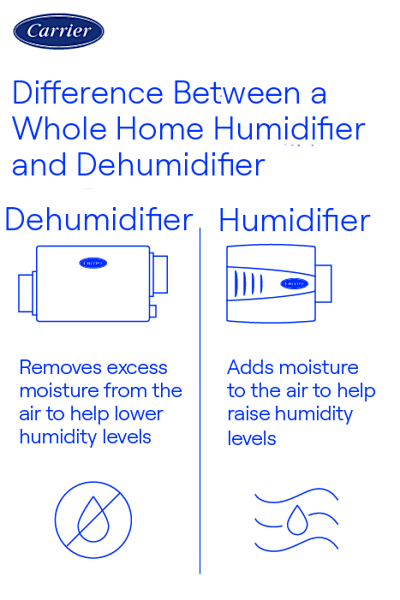
Is the air in your home making you uncomfortable? Maybe you’re waking up with a dry throat or noticing your skin feels itchy.
Or perhaps you’re seeing signs of mold or feeling sticky and clammy indoors. These are clues about your home’s air moisture levels—and knowing whether you need a humidifier or a dehumidifier can make all the difference. You’ll discover how to identify what your space really needs to feel fresh and healthy.
Keep reading, because getting this right will not only improve your comfort but also protect your health and belongings.

Credit: www.carpetcleaningforce.co.nz
Signs You Need A Humidifier
Knowing when your home needs a humidifier can greatly improve your comfort and health. Low humidity affects more than just the air you breathe; it impacts your skin, furniture, and even your electrical devices. Watch for these signs to decide if adding moisture to your environment is the right move.
Dry Skin And Irritation
Do you notice your skin feeling tight, flaky, or itchy, especially during colder months? Dry indoor air pulls moisture from your skin, leading to irritation and discomfort. If your usual lotions don’t seem to help, it might be time to consider a humidifier to restore balance.
Frequent Respiratory Issues
Are you waking up with a scratchy throat, or do you often suffer from nasal congestion and dry coughs? Dry air can irritate your respiratory tract, making it harder to breathe comfortably. Adding moisture can soothe your airways and reduce these persistent problems.
Static Electricity Problems
Do you get shocked more often when touching doorknobs or other objects? Low humidity increases static electricity buildup, which can be annoying and even damaging to electronics. A humidifier helps reduce static by adding moisture back into the air.
Cracked Wooden Furniture
Have you noticed cracks or splits forming in your wooden furniture or flooring? Dry air causes wood to shrink and crack over time. Maintaining proper humidity levels protects your valuable wood pieces and keeps your home looking its best.
Signs You Need A Dehumidifier
High humidity inside your home can cause many problems. A dehumidifier helps reduce moisture in the air. Knowing the signs of excess humidity helps decide if you need one. Watch for these common indicators that your space is too damp.
Musty Odors And Mold Growth
Musty smells are a clear sign of too much moisture. Mold and mildew thrive in damp places. You may see black or green spots on walls or ceilings. These fungi can damage your home and harm your health.
Condensation On Windows
Water droplets on windows mean high indoor humidity. This happens more in colder weather. Constant condensation can lead to wood rot and paint damage. It also signals that air moisture levels need control.
Allergy And Asthma Flare-ups
Humidity encourages dust mites and mold spores. These can trigger allergies and asthma attacks. If you notice more sneezing, coughing, or breathing problems indoors, moisture may be the cause. Reducing humidity often improves air quality.
Damage To Walls And Paint
Peeling paint and bubbling wallpaper show moisture issues. Walls may feel damp or look stained. Over time, this weakens your home’s structure. A dehumidifier helps protect your walls from further harm.
Measuring Indoor Humidity
Measuring indoor humidity is essential for a comfortable home. Too much or too little moisture can cause problems. Use the right tools to find the right balance.
Using A Hygrometer
A hygrometer measures humidity levels in the air. It’s a simple tool. Place it in a central room for accurate readings. Digital hygrometers are easy to read. They provide quick results. Regular checks can help maintain comfort.
Ideal Humidity Levels
Indoor humidity should be between 30% and 50%. This range prevents mold and dryness. Below 30% can cause dry skin and irritation. Above 50% might encourage mold and dust mites. Aim for balance to ensure health and comfort.
Seasonal Variations
Humidity changes with the seasons. Winter air is often dry. Heating systems reduce indoor moisture. A humidifier might be needed. In summer, humidity is higher. Air conditioners can help reduce it. Use a dehumidifier if needed. Monitor regularly to adjust as seasons change.
Credit: all-temphvac.com
Choosing The Right Device
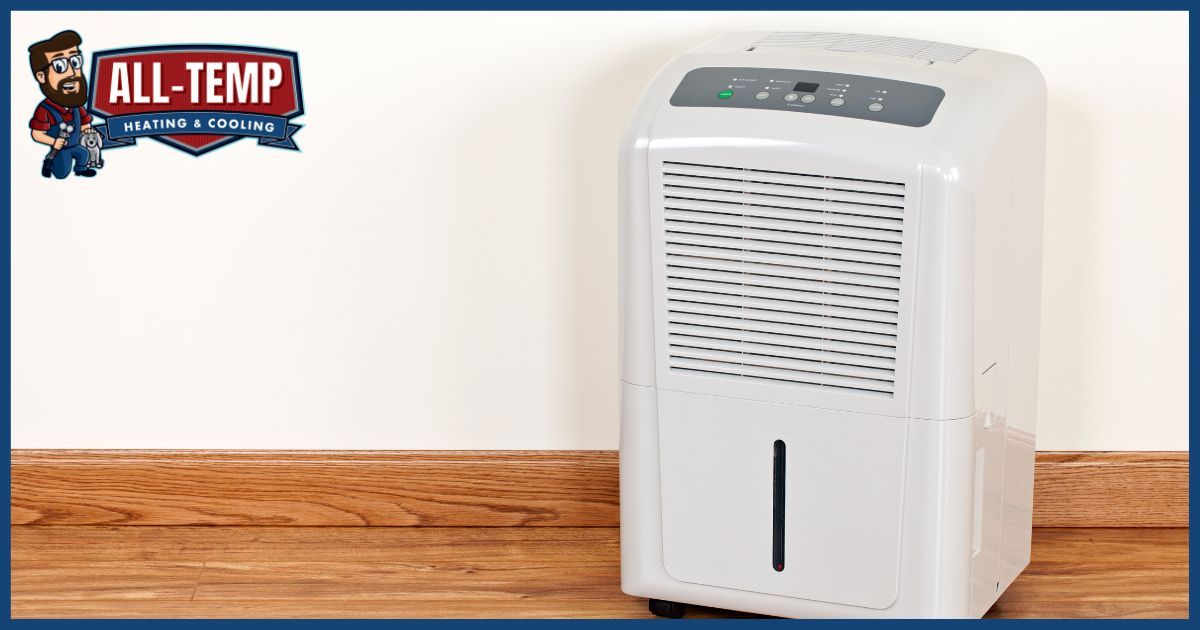
Choosing the right device for your home depends on your indoor air needs. A humidifier adds moisture to dry air, while a dehumidifier removes excess dampness. Knowing the different types of each device helps you pick the best fit. Room size and device capacity also affect effectiveness. Understanding these factors ensures better air quality and comfort in your space.
Types Of Humidifiers
There are several types of Humidifiers. Here is some common types of them:
- Evaporative:Uses a wick filter to absorb water, then a fan blows air through it.
- Ultrasonic:Creates a cool mist using ultrasonic vibrations.
- Steam Vaporizers:Boil water to create warm steam that moistens the air.
- Impeller:Uses a rotating disk to spray water droplets into the air.
Types Of Dehumidifiers
- Refrigerant:Pulls air over cold coils to condense moisture.
- Desiccant:Uses a moisture-absorbing material to dry the air.
- Peltier:Uses a thermoelectric cooling system, good for small spaces.
Capacity And Room Size Considerations
Match the device capacity to your room size for best results. Small rooms need smaller units. Large rooms require higher capacity devices.
| Room Size | Recommended Capacity |
|---|---|
| Up to 300 sq ft | Humidifier: 1-2 gallons/day Dehumidifier: 20-30 pints/day |
| 300-600 sq ft | Humidifier: 2-3 gallons/day Dehumidifier: 30-50 pints/day |
| 600+ sq ft | Humidifier: 3+ gallons/day Dehumidifier: 50+ pints/day |
Check the device’s specifications before buying. Choose one that fits your space and moisture needs.
Maintenance Tips
Proper maintenance keeps your humidifier or dehumidifier working well. Regular care extends the device’s life and improves air quality. It also stops mold and bacteria from growing inside the machine. Follow these simple steps to maintain your device efficiently.
Cleaning And Refilling Humidifiers
Empty the water tank daily to avoid stale water. Use a soft cloth to wipe the tank clean. Clean the tank with mild soap and water once a week. Rinse thoroughly to remove soap residue. Refill the tank with fresh, clean water each time. Avoid using tap water if it is hard. Distilled or filtered water works best to prevent mineral buildup.
Emptying And Cleaning Dehumidifiers
Check the water collection bucket regularly. Empty it before it becomes full to avoid overflow. Clean the bucket with warm, soapy water weekly. Wipe the exterior with a damp cloth to remove dust. Clean or replace the air filter as instructed by the manufacturer. This helps the dehumidifier run smoothly and efficiently.
Preventing Mold And Bacteria Growth
Use cleaning solutions recommended for your device type. Dry all parts thoroughly after cleaning to prevent moisture buildup. Place your device in a well-ventilated area to reduce dampness. Avoid leaving water standing in tanks or buckets. Regularly check for any mold or unusual smells. Replace parts that show signs of mold or damage immediately.
Health Benefits Of Balanced Humidity
Balanced humidity in your home plays a key role in health and comfort. It helps keep the air moist enough to prevent dryness but not too wet to cause mold. Maintaining the right humidity level supports your body and your living space. This section explains the health benefits of balanced humidity and why it matters.
Improved Respiratory Comfort
Proper humidity eases breathing by keeping airways moist. Dry air can irritate your nose, throat, and lungs. It may cause coughing, congestion, or sore throat. Humid air helps reduce these symptoms. It also lowers the risk of respiratory infections by keeping mucus membranes healthy.
Better Sleep Quality
Humidity affects how well you sleep. Dry air can cause snoring and dry mouth. It may also disturb your sleep by irritating your throat. Balanced humidity creates a comfortable environment for restful sleep. It helps you wake up feeling fresh and energized.
Protection For Home Furnishings
Humidity impacts your furniture and home items. Too much moisture can cause wood to swell and warp. It also promotes mold and mildew growth on fabrics and walls. Too little moisture makes wood crack and paint peel. Balanced humidity protects your belongings and keeps your home in good shape.
Credit: comforttemp.com
Frequently Asked Questions
What Are Signs You Need A Humidifier?
Dry skin, cracked lips, and static electricity indicate low humidity. A humidifier adds moisture, easing breathing and protecting wood furniture.
How Can I Tell If I Need A Dehumidifier?
If you notice mold, musty smells, or condensation on windows, humidity is high. A dehumidifier reduces moisture to prevent damage and allergies.
Can A Humidifier Help With Respiratory Issues?
Yes, humidifiers soothe dry airways and nasal passages. They reduce irritation from colds, allergies, and asthma by maintaining optimal indoor humidity.
When Should I Use A Dehumidifier In My Home?
Use a dehumidifier in damp areas like basements or bathrooms. It prevents mold growth, dust mites, and improves overall air quality.
Conclusion
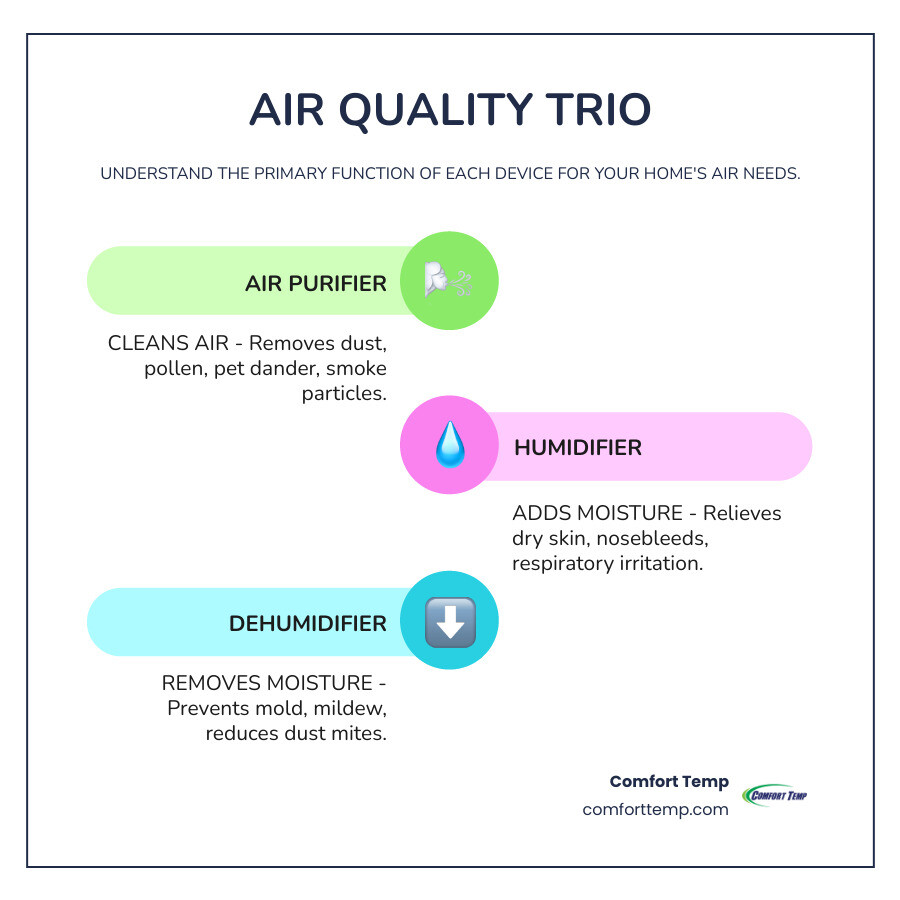
Choosing between a humidifier and a dehumidifier depends on your home’s air moisture. Too dry? A humidifier adds needed moisture. Too wet? A dehumidifier removes excess water. Both help keep your space comfortable and healthy. Check your home’s humidity level with a simple meter.
This small step guides your choice well. Remember, balanced air means better breathing and less damage to your home. Simple tools can make a big difference in your comfort. Take action today for a fresher, healthier home environment.


